
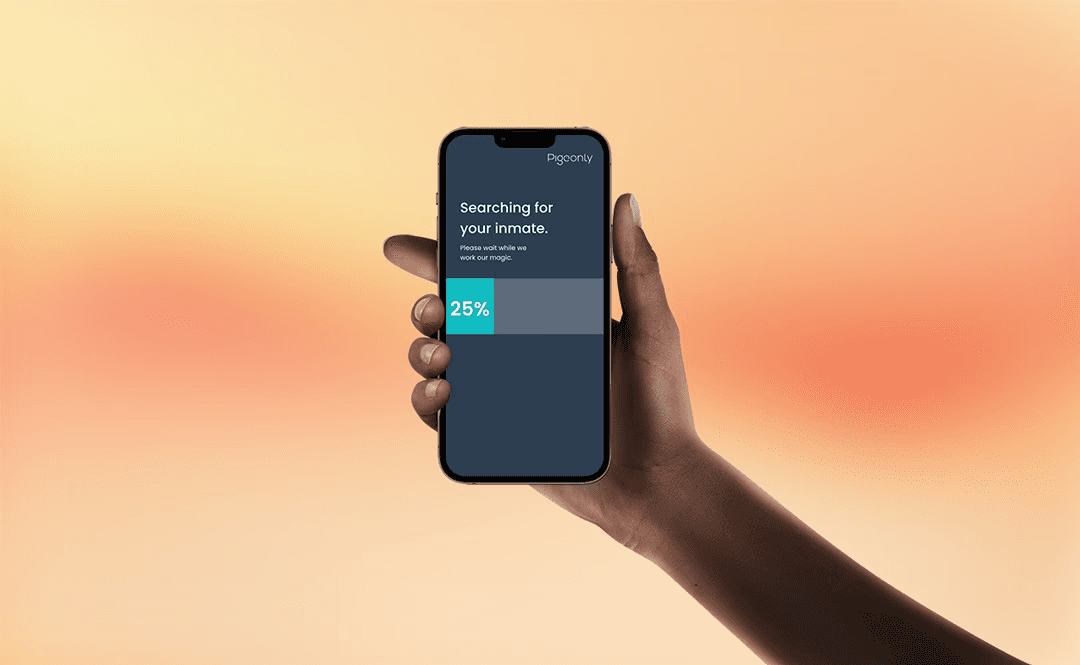
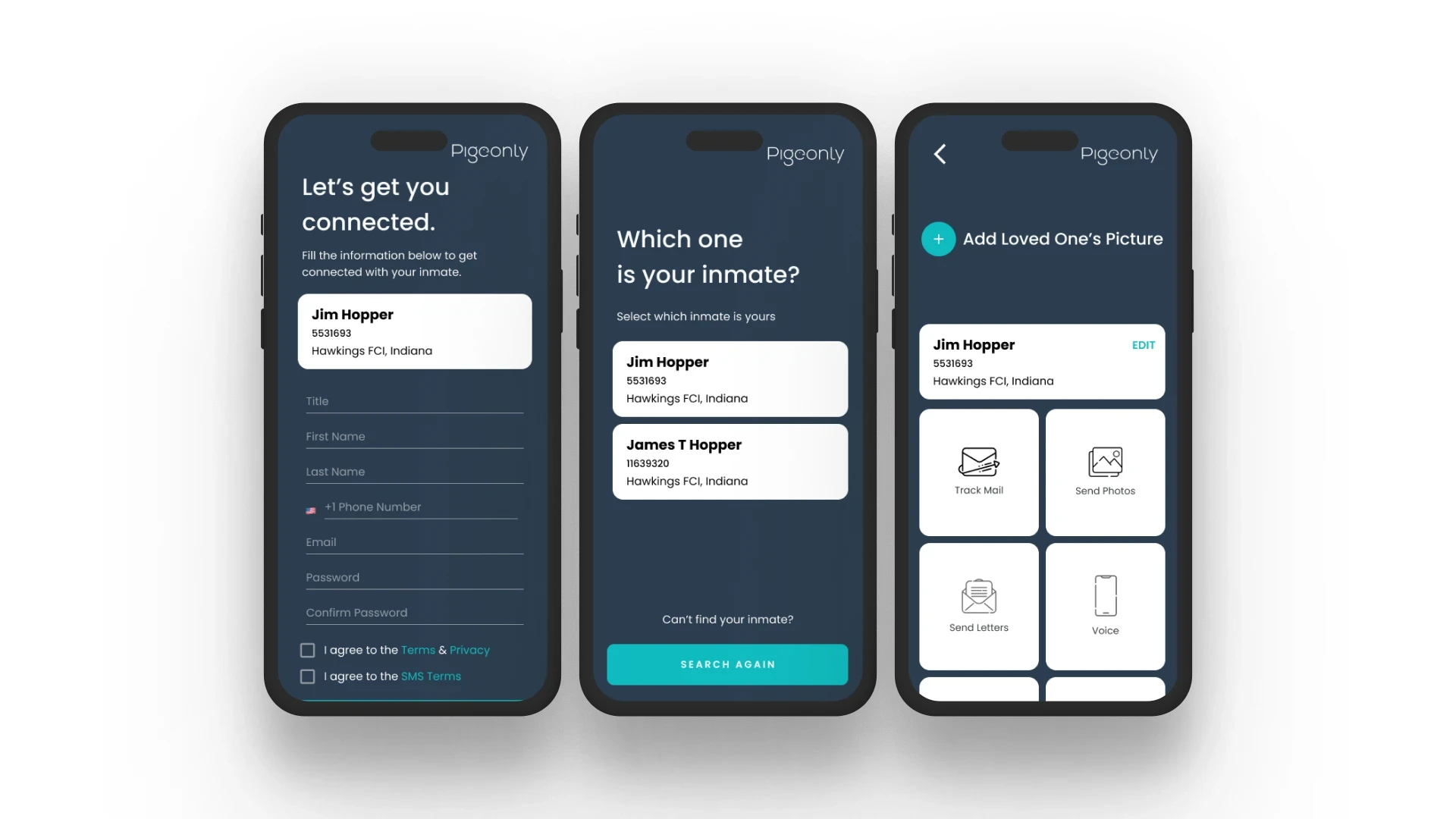
Pigeonly builds platforms that help families stay connected with incarcerated loved ones—operating across consumer products, internal enterprise tools, and government-facing systems. The work required a high level of trust, reliability, and clarity while supporting rapid iteration across multiple product surfaces.
I led UX and design across the organization, establishing scalable design foundations that supported both product growth and operational complexity.Use a Hardware Wallet
The Challenge
Pigeonly’s product ecosystem spanned multiple audiences with very different needs:
Consumer-facing products for families
Internal tools for customer service and fulfillment teams
Government-facing platforms deployed nationwide
As the company scaled, design decisions needed to balance speed, consistency, accessibility, and sensitivity—often under tight constraints and evolving requirements.
Key challenges included:
Multiple products without a shared design foundation
High operational complexity in internal tools
The need to move quickly without eroding trust or usability
Ensuring reliability in systems used in real-world, high-impact contexts
My Role
As Head of UX & Design, I owned design strategy and execution across all products, partnering closely with engineering, product, and leadership.
My responsibilities included:
Establishing scalable UI and interaction patterns across products
Designing internal tools to support customer service and fulfillment workflows
Defining shared foundations that enabled reuse without blocking iteration
Setting design standards and direction across consumer and enterprise experiences
This role required balancing hands-on design with system-level decision-making.
System Approach
Modular Foundations
Rather than treating each product independently, I focused on modular UI patterns that could be reused and adapted across different surfaces.
Systems for Real Work
Internal tools were treated as first-class products. Design decisions prioritized clarity, efficiency, and error reduction for operational teams.
Flexibility Within Constraints
Government-facing platforms required higher levels of reliability and compliance. Systems were designed to be adaptable without compromising trust or clarity.
Execution Highlights
Designed reusable UI patterns shared across consumer, internal, and government platforms
Led the redesign of internal dashboards supporting customer service and fulfillment teams
Established interaction standards that reduced inconsistency across products
Supported nationwide deployment of government-facing systems
Impact
Enabled faster iteration across multiple products
Improved efficiency and clarity for internal operational teams
Increased consistency across consumer and enterprise experiences
Supported platforms used in high-stakes, real-world environments
10,000+ monthly users benefited from a vastly simplified product experience.
Reduced launch times through reusable templates and consistent components.
Increased conversions via consistent branding and optimized email/social templates.
Cost savings by avoiding the need to hire additional designers.
Internal efficiency and dev handoff speed increased through a templated approach
Key Takeaway
Design systems are not just about visual consistency—they are about enabling trust, reliability, and clarity when products directly impact people’s lives.
