
At Hilton, I stepped into a role that evolved from individual contribution to leading one of the most foundational efforts in our digital transformation: the development and scale of our mobile design system. Starting as a contractor, I helped wrangle the chaos of an inconsistent UI ecosystem. I served as the Product Owner of the Design System Pod, responsible for architecting the component framework, scaling documentation, and bridging cross-functional alignment.
Problem & Context
Challenge: How do we increase efficiency and reduce both design and development time for features across Hilton’s mobile ecosystem?
When I joined, Hilton’s mobile platform lacked a shared design language. Designers used different names and structures for the same UI elements. There was no true design system—just loosely aligned typography and color palettes. UI components were inconsistently built, undocumented, and interpreted differently across iOS and Android. This fragmentation led to wasted time, inconsistent guest experiences, and massive communication gaps between design and engineering teams.
The cultural mindset leaned toward handoffs rather than collaboration. As someone fluent in both design and development, I immediately recognized the opportunity to shift from siloed workstreams to a more unified, scalable model rooted in shared understanding.
My Approach
Laying the Foundation
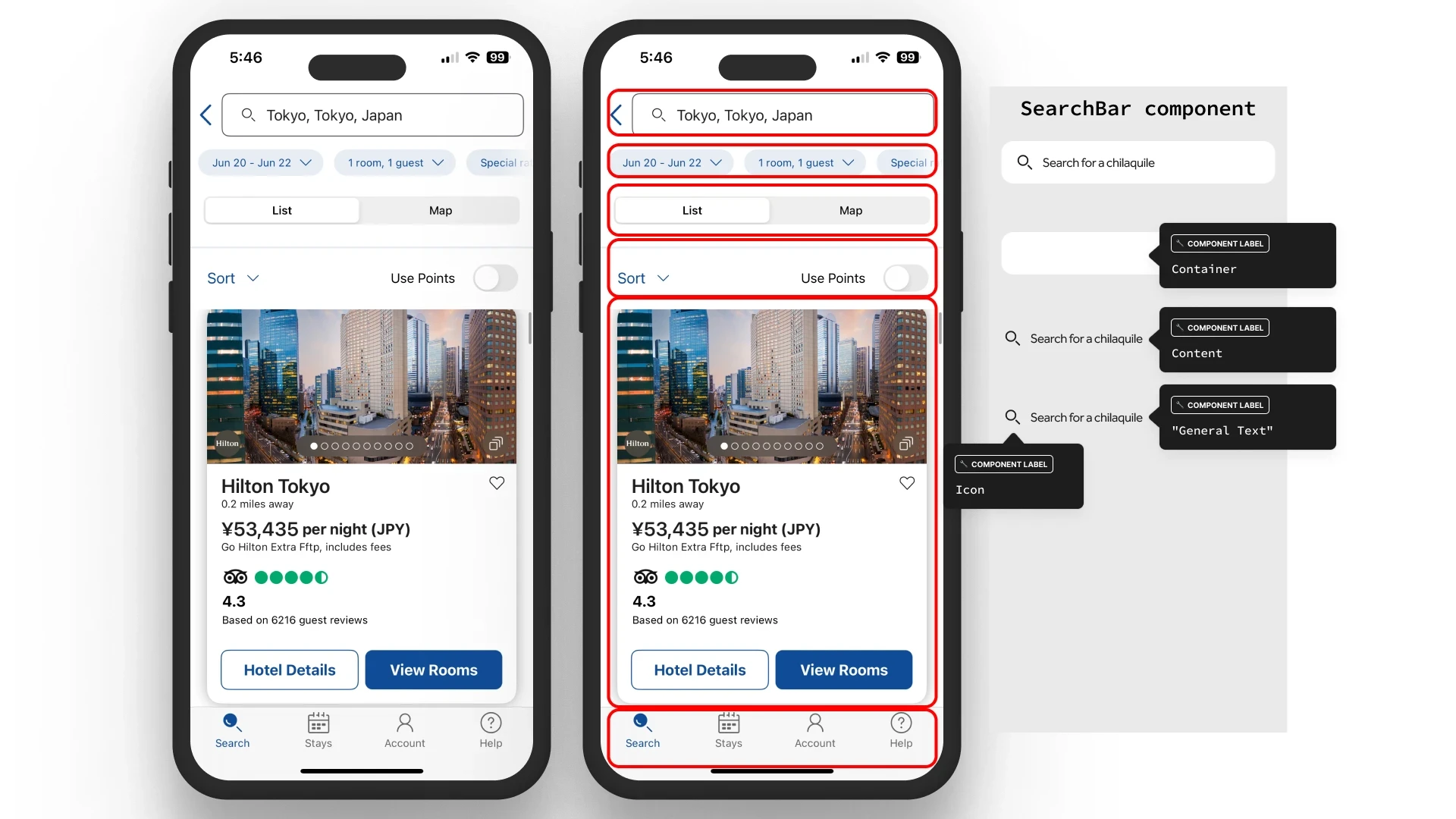
The first step was aligning our teams on a shared language—literally. I spearheaded efforts to standardize naming conventions and design practices using atomic design principles. This allowed us to break the UI down into modular, reusable building blocks. I pushed for every component to live in context: content components inside containers, defined behaviors, and documented rules of use.
Cross-Functional Collaboration
Working alongside development, content, accessibility, and research teams, I evangelized the principles of reusable design. I didn’t just create components—I helped reframe how we think about building them. From decision logs to parity initiatives, my approach was always: start together, finish together.
Navigating Resistance
Some teams were hesitant. Not everyone understood what a design system is or what it isn’t. I leaned into education: running 1:1s, leading working sessions, and piloting new documentation methods. As a representative of the UI Council, I also collaborated with web and internal tools teams to unify standards across platforms, not just within mobile.
Key Contributions
🚀 Design System Leadership
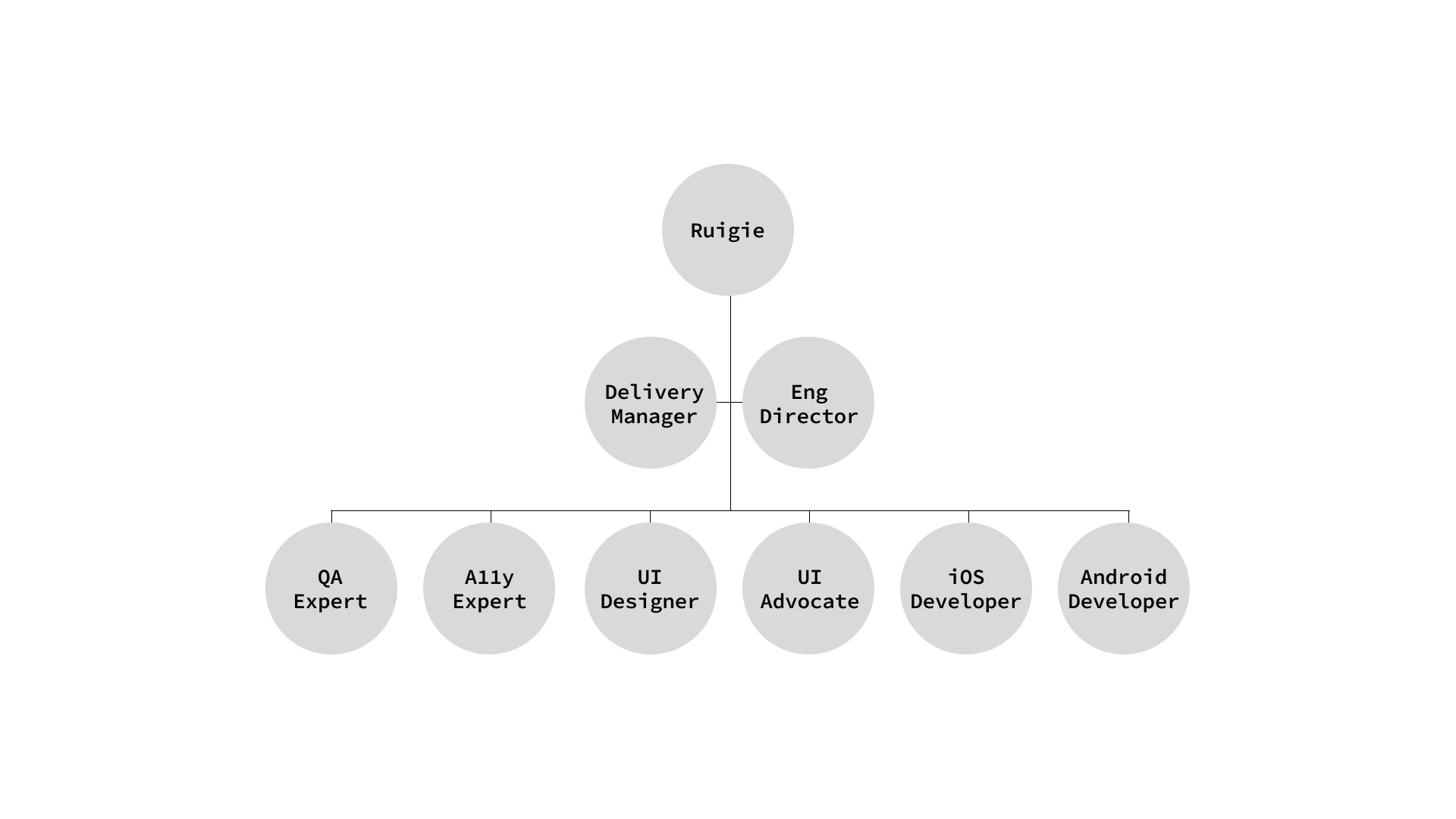
Became Product Owner of the Design System Pod
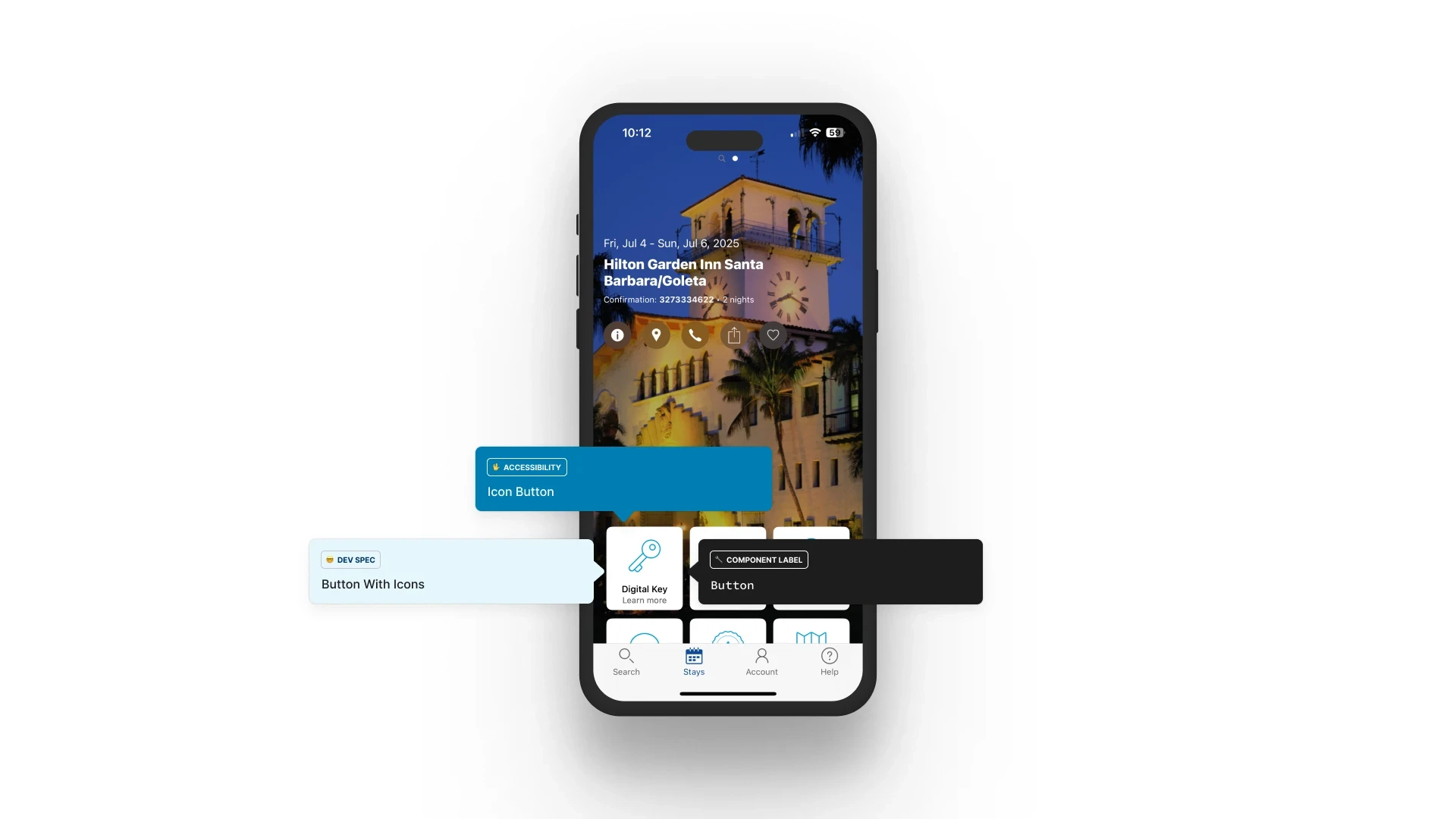
Created a shared library for core mobile components (e.g. ButtonGroup, SearchBarButton, Slider, RadioButtonGroup)
Defined scalable naming conventions for UI elements across iOS and Android
Helped establish a component architecture that prioritizes content-first design within container frameworks
📚 Documentation + Education
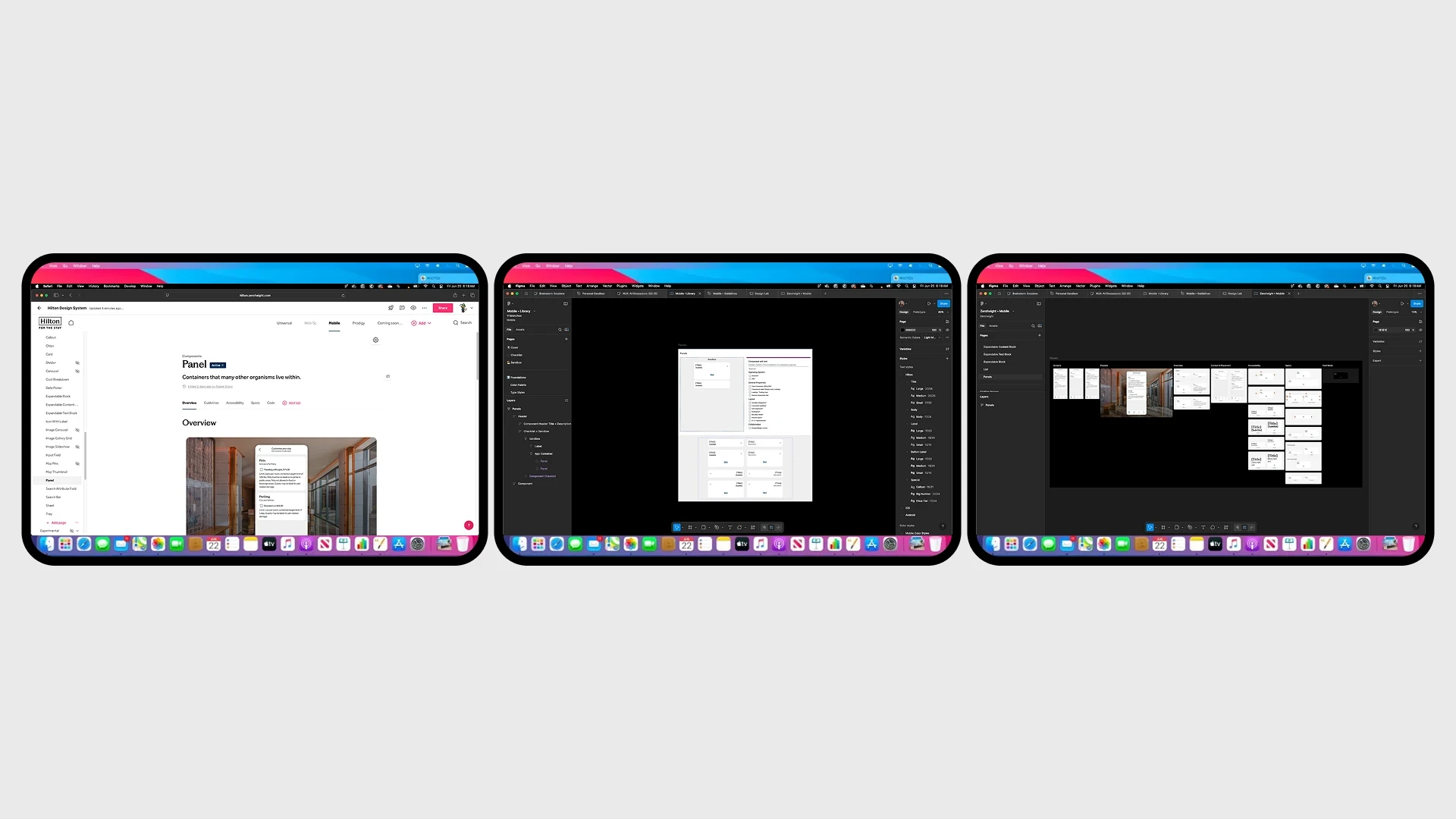
Led migration to ZeroHeight for unified component documentation
Designed reusable templates used across Hilton’s platforms
Regularly ran Design Lab teaching sessions and contributed heavily to UI Council standards
📈 Operational & Strategic Wins
Improved feature release efficiency by ~45% since joining
Aligned component parity across mobile platforms (e.g., ChipRow, AlertMessage, DatePicker)
Built self-service tooling and docs for brand asset teams and partners like MARTECH
Difficult Decisions
The most challenging aspect of this work wasn’t the UI—it was the team dynamics. When I stepped into the Product Owner role, I had to shift from being a hands-on designer to a strategist. That meant defining priorities, navigating cross-functional politics, and realigning workstreams. I had to make difficult calls, like stepping back from UX-focused roles on the pod and doubling down on scalable UI efforts that served the broader org.
Results
Significant increase in development and design efficiency org-wide
Unified the design language across all mobile platforms
Successfully shifted the team culture toward shared ownership and collaboration
Helped pave the way for the M3 design system rollout in line with Hilton’s rebrand
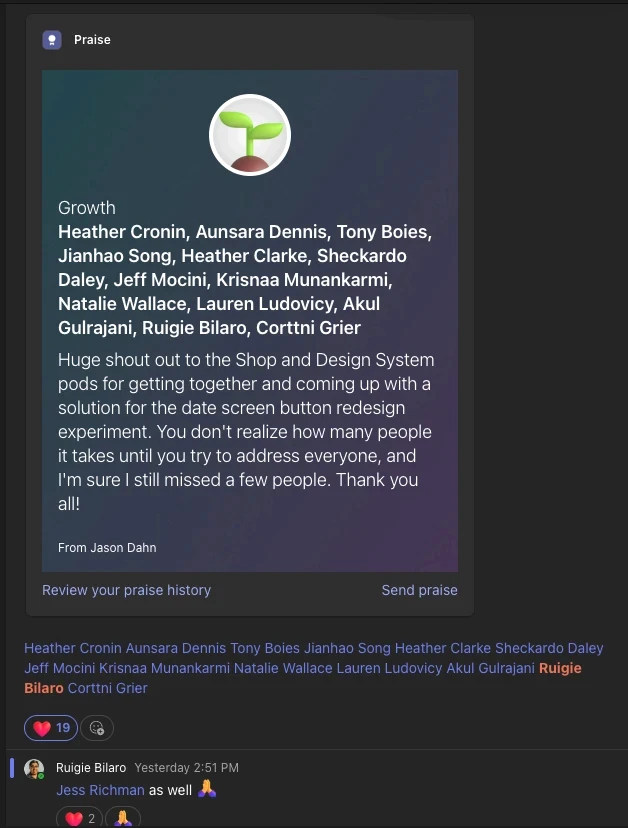
While specific metrics are confidential, my work has been acknowledged through promotion consideration and direct praise from leadership across product, design, and engineering.
Major Takeaway
If you’re building a system, start by listening. Learn the language of your partners—engineering, accessibility, content. Find the patterns in their problems and build solutions that work for everyone. Great design systems aren’t just tools. They’re bridges.
